 Phoenix Terrazzo Restoration
Terrazzo Floor Restoration in Phoenix
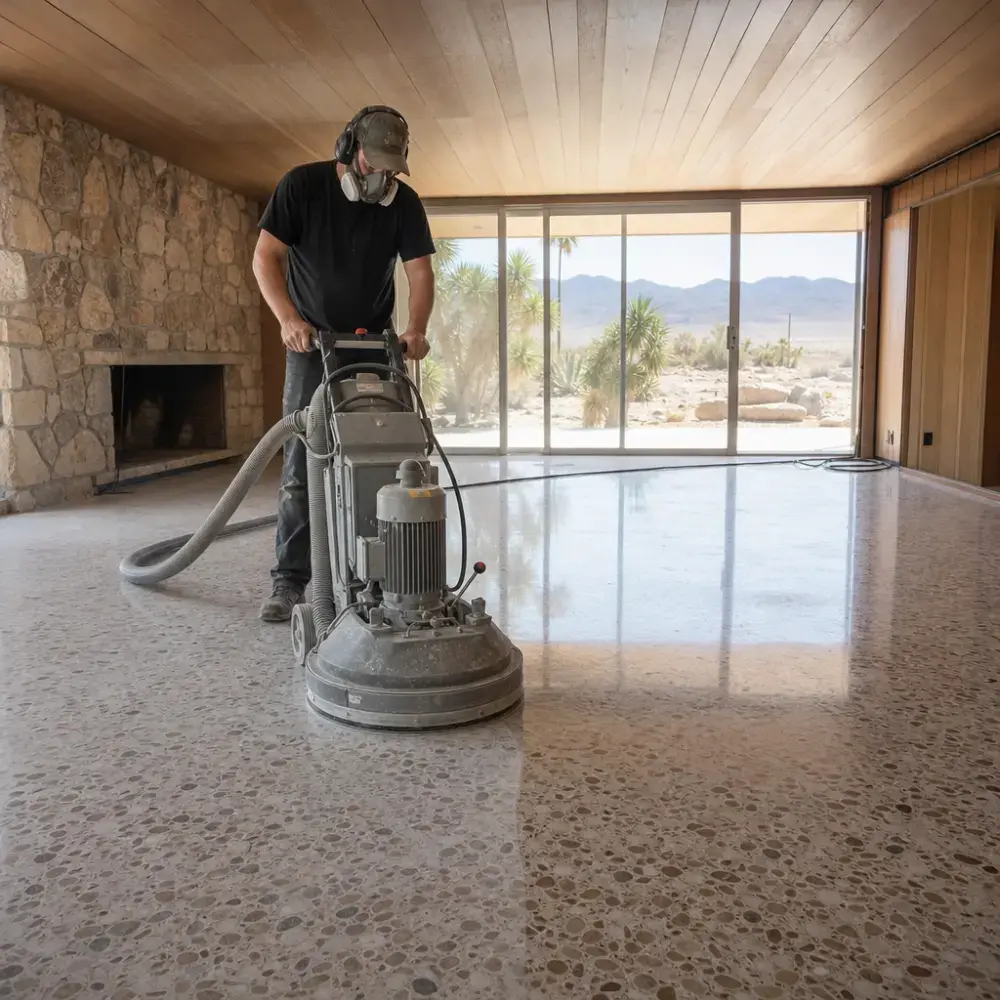
Terrazzo restoration in Phoenix typically costs $4 to $8 per square foot for the grind, hone, polish, and seal, plus $1 to $3 per square foot if carpet and glue have to come off first or $4 to $6 for tile. It is the full job: expose the floor, fix what is broken, grind off what is damaged, polish up what is left, and seal it. A typical home job of 500 to 1,200 square feet of terrazzo lands between $2,500 and $12,000 all in, and more when a large floor is under tile.
What you probably have
Before we talk process, a reality check about Valley floors. The City of Scottsdale’s postwar housing context describes the typical Arizona ranch of the 1950s as having concrete floors. So if you are reading this page, either you have already seen terrazzo under a corner of carpet, or you are hoping. If you are hoping, check first: the mid-century floors guide shows how to tell in five minutes.
What a restored Phoenix floor usually turns out to be is cement terrazzo: marble chips set in a pigmented Portland cement matrix, divided into panels by brass or zinc strips. The NTMA notes that Portland cement was the original terrazzo binder, and that the most common binder today is epoxy, which is why newer commercial floors can behave differently from a 1950s living room. The cement vs epoxy page covers how to tell.
The five stages
1. Expose and assess
Carpet, pad, and tack strip come up, or tile gets chipped off. We look at chip size and color, matrix color, thickness, divider strips, cracks, and any old coating. If there is asphalt tile or black adhesive in the mix, it gets tested before anyone grinds it, because the EPA lists floor tiles and adhesives among products that may contain asbestos and recommends testing by an accredited professional. The firm number gets confirmed in writing here, once the floor is visible.
2. Repair
Cracks and holes get cleaned of loose material and filled. The NTMA’s restoration specification says to fill cracks with resin matched to the existing floor and to put aggregate in any crack wider than a quarter inch. Tack-strip holes around a perimeter get filled in a run. Missing divider strip gets replaced. Cracks that look like they are still moving get flagged, because the NTMA’s own advice is that a crack patched without knowing its cause will probably come back. More on the crack repair page.
3. Grind
Planetary grinders with metal-bond diamonds cut down through glue, stains, old wax or acrylic, and the worn top of the stone until the floor is flat and clean. We grind wet or with vacuum shrouds and HEPA collection. OSHA’s construction silica standard sets an exposure limit of 50 micrograms per cubic meter averaged over eight hours and lists integrated water or dust collection for floor grinders; it is written for workers, and it is also why your house stays livable.
4. Grout, hone, and polish
The NTMA specification calls for wet grinding with 50 grit or finer, then grouting the floor with matching cement or epoxy to fill pinholes, then letting the grout cure for at least 12 hours with the room between 70 and 80 degrees. In Phoenix that last part matters. A vacant house in July with the air conditioning off can run well above 80 degrees inside, outside the window the specification sets. So the AC runs during grout and seal days.
After the grout cures, resin-bond diamonds take the floor up through the grits. Where you stop decides the look: a honed satin, a soft sheen, or a high gloss. The grinding and polishing page explains each step.
5. Seal
A penetrating sealer goes on in thin coats, each allowed to dry before the next, following the manufacturer’s directions. The NTMA’s maintenance guide says thin coats beat one heavy coat and that gloss comes from the polish and the sealer together, so do not expect a sealer to make a dull floor shine. No wax, no acrylic, no urethane film.
What restoration cannot do
- Erase every stain. The NTMA’s restoration specification says outright that all staining in existing terrazzo may not be possible to remove. Rust and dye usually come out. Deep pet urine and oil may only lighten. The stain page goes through which is which.
- Make a patch invisible. Marble is mined, and the NTMA notes that matching existing aggregate may not be exact. Patches look right from standing height and are visible on your knees.
- Stop a slab from moving. The Arizona Geological Survey lists heaving and cracking of floor slabs among the effects of the state’s problem soils. A crack over a moving slab is a foundation question first.
- Turn concrete into terrazzo. If the floor is plain slab, we polish the slab. See concrete floor polishing.
Phoenix-specific things we plan around
- Heat. Grout and sealer need a cooled room. We schedule around it rather than fight it.
- Monsoon dust. The official monsoon runs June 15 through September 30, and dust storms are part of it. Grit is what dulls a polished floor, so the care sheet we leave starts with dust mopping.
- Hard water. Valley tap water is very hard. The final rinse and your future mopping routine should not leave mineral film behind, and the sealing page covers how.
Pricing
| Line | Typical range |
|---|---|
| Restoration (grind, grout, hone, polish, seal) | $4 to $8 per sq ft |
| Carpet, pad, tack strip, and glue removal | $1 to $3 per sq ft |
| Tile and thinset removal | $4 to $6 per sq ft |
| Patches | $75 to $250 each |
| Stain and rust treatment | $150 to $600 per area |
| Minimum visit | $600 to $1,000 |
The pricing page has worked examples, and the cost calculator will price your floor in a minute. To start, send a photo of a corner with the carpet pulled back and the rough square footage of the terrazzo rooms.
Frequently Asked Questions
What does a full terrazzo restoration include?
Everything from the covering to the seal: carpet, tack strip, or tile removal, crack and hole repair with matched chips, metal-bond grinding, grouting, resin-bond honing and polishing to the sheen you choose, and a penetrating sealer. Typically $4 to $8 per square foot for the restoration, with removal priced separately.
How long does a Phoenix terrazzo restoration take?
A few days for the typical 500 to 1,200 square feet. Patches and grout need cure time, and the NTMA restoration specification calls for at least 12 hours of grout curing with the room between 70 and 80 degrees. Tile removal or a lot of repairs adds days.
Can a terrazzo floor that was covered for 50 years still be restored?
Almost always. Carpet protects terrazzo more than it hurts it. The tack-strip holes, glue, and rust rings it leaves behind are surface problems that grinding and patching take care of. The floors that need more work are ones under tile, ones with a moving crack, and ones with sections that have come loose from the slab.
Is restoration better than replacing the floor?
If the terrazzo is sound, yes. This Old House puts new cement terrazzo at about $15 to $25 per square foot installed, and the material lasts for generations. Restoring what you have is a fraction of that.
More terrazzo services
- Terrazzo Grinding and Polishing in Phoenix
- Terrazzo Crack and Hole Repair in Phoenix
- Carpet, Tile, and Glue Removal Over Terrazzo in Phoenix
- Terrazzo Stain and Rust Removal in Phoenix
- Terrazzo Sealing and Maintenance in Phoenix
- Commercial Terrazzo Restoration in Phoenix
- Concrete Floor Grinding and Polishing in Phoenix (When the Carpet Comes Up on Concrete)
Areas we serve
- Phoenix, AZ
- Concrete and Terrazzo Floor Restoration in Maryvale
- Terrazzo and Floor Restoration in Sun City
- Terrazzo and Floor Restoration in Sunnyslope
- Terrazzo Restoration in Arcadia
- Terrazzo Restoration in Mesa
- Terrazzo Restoration in Paradise Valley
- Terrazzo Restoration in Scottsdale
- Terrazzo Restoration in Tempe